
Worked example
Full circle skirt with a zipper
- Waist
- 28"
- Length
- 22"
- Fabric width
- 60"
- Seam / hem
- 5/8" / 1"
Result
- Cut waist radius
- 3 7⁄8"
- Cut hem radius
- 27 1⁄2"
- Fabric to buy
- 1 1/2 yd (1.4 m)
- Layout
- 4 panels, waistband included
Free sewing calculator · 1:1 printable PDF
Enter your waist and length to get the cut waist radius, hem radius and fabric yardage for 45" or 60" fabric — then print a true-scale pattern on A4 or US Letter.
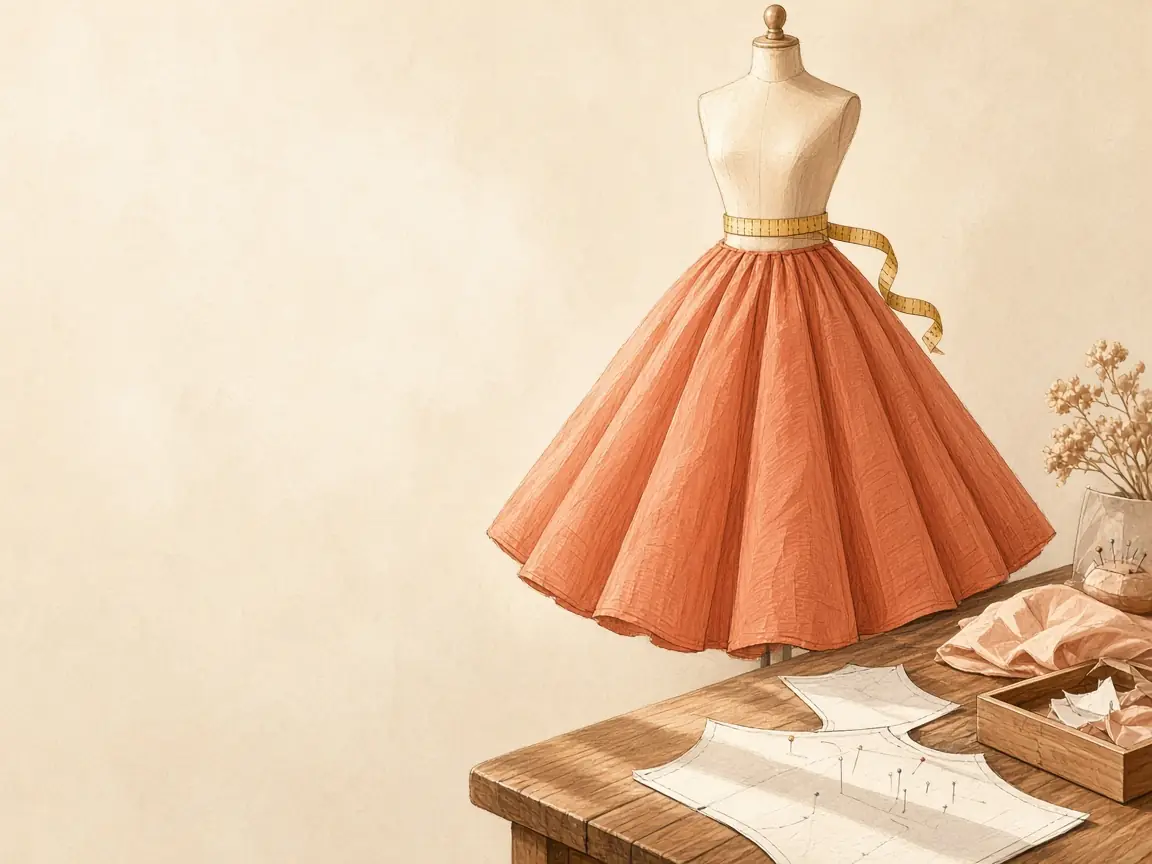
Leave a zipper opening long enough that waist opening + zipper length clears your hip (40"); a 7–9" (18–23 cm) zipper usually does.
4 panels of 90° on open fabric, using 51 1⁄4" (130.1 cm) of length, waistband included. Selvedges run along the top and bottom.
Grain: panels are never turned to odd angles - one straight seam edge of every panel runs along the lengthwise grain, parallel to the selvedge (marked as the green line on the layout; the arrow shows the selvedge direction). The hem still crosses the bias, which is normal for a circle skirt.
How it works
The calculator does the geometry; you measure, print and sew.
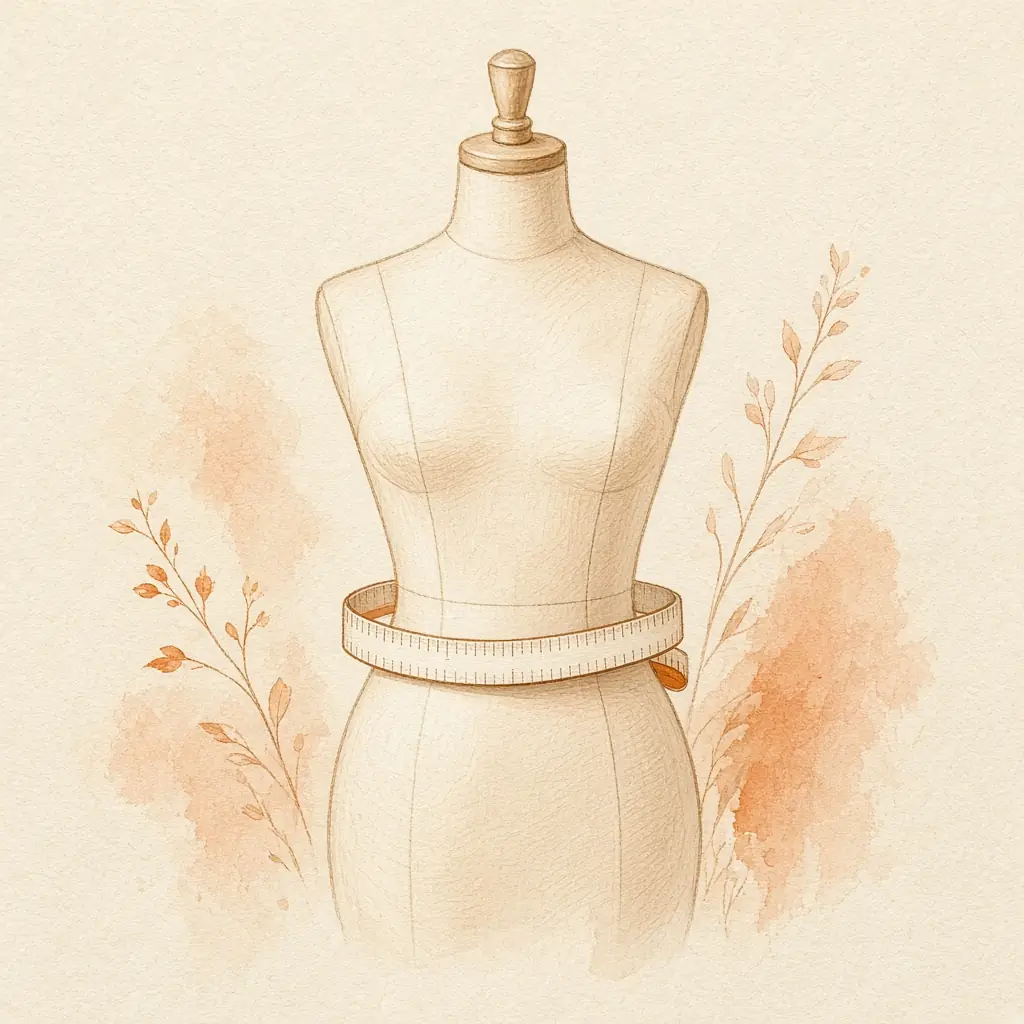
Measure your natural waist snugly and the length from the waist seam to where the hem should fall. For a pull-on elastic skirt, measure your hips too.
Pick full, ¾, half or quarter circle, the closure and your fabric width. Fractions like 27 1/2 work in inch mode.
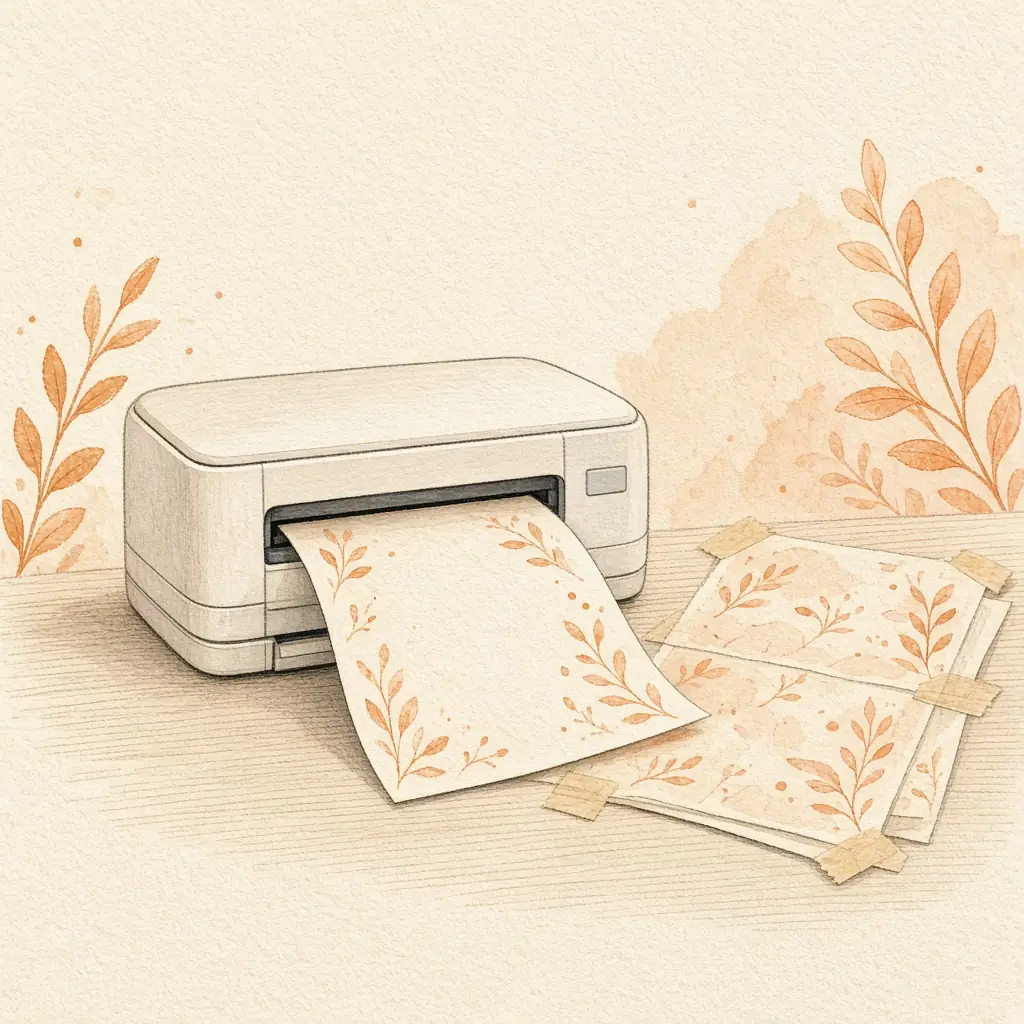
Download the 1:1 PDF, print at 100%, check the 2" and 5 cm test squares and tape the pages on the crosshairs.
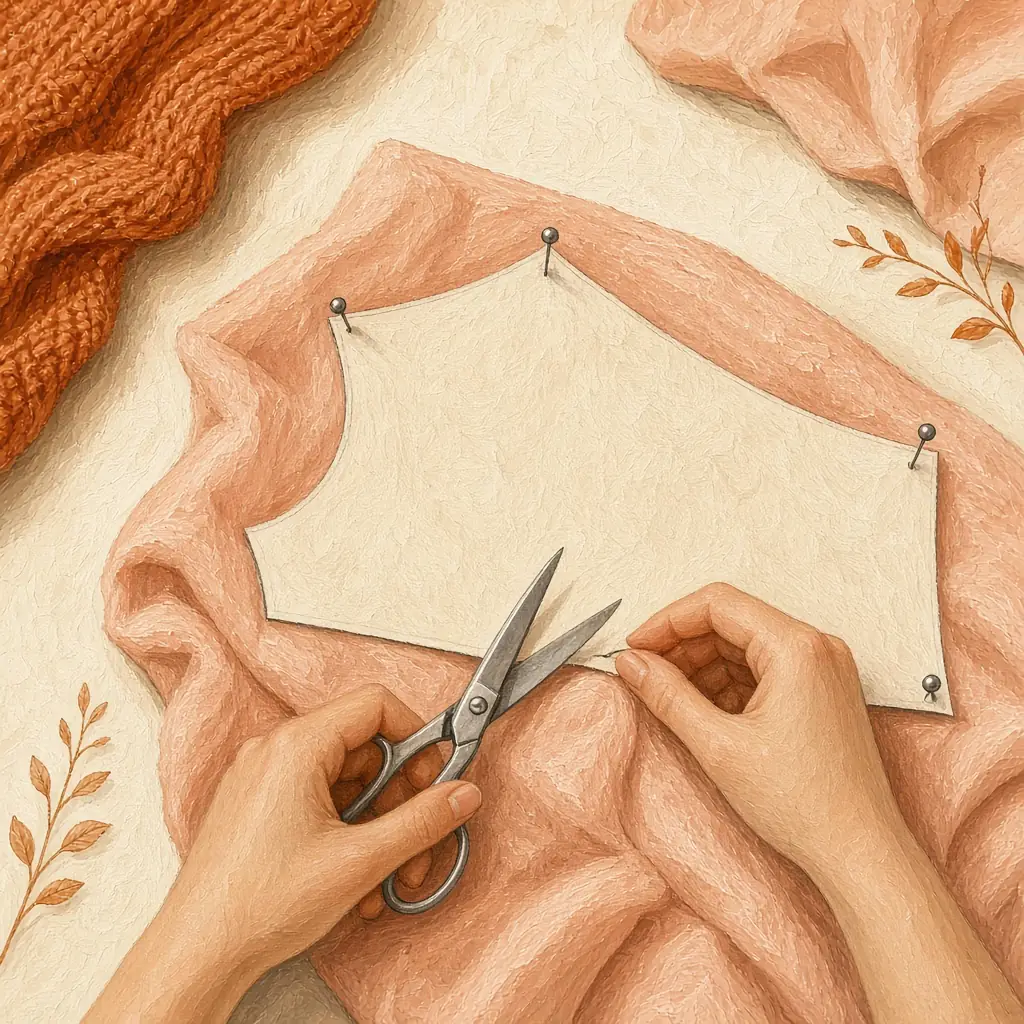
Lay the template on the grain line shown in the layout, cut on the red line, stay-stitch the waist and sew.
More calculators
Same units, same printable output — pick the calculator that matches your project.
Worked examples
Three common skirts with the exact output the calculator gives today. Open any of them to tweak the numbers.
Worked example
Result
Worked example
Result
Worked example
Result
The elastic check passes: at 50% stretch the elastic reaches past the 38" hip.
Use cases
Each card opens the calculator pre-filled with a typical size, so you only change what differs.
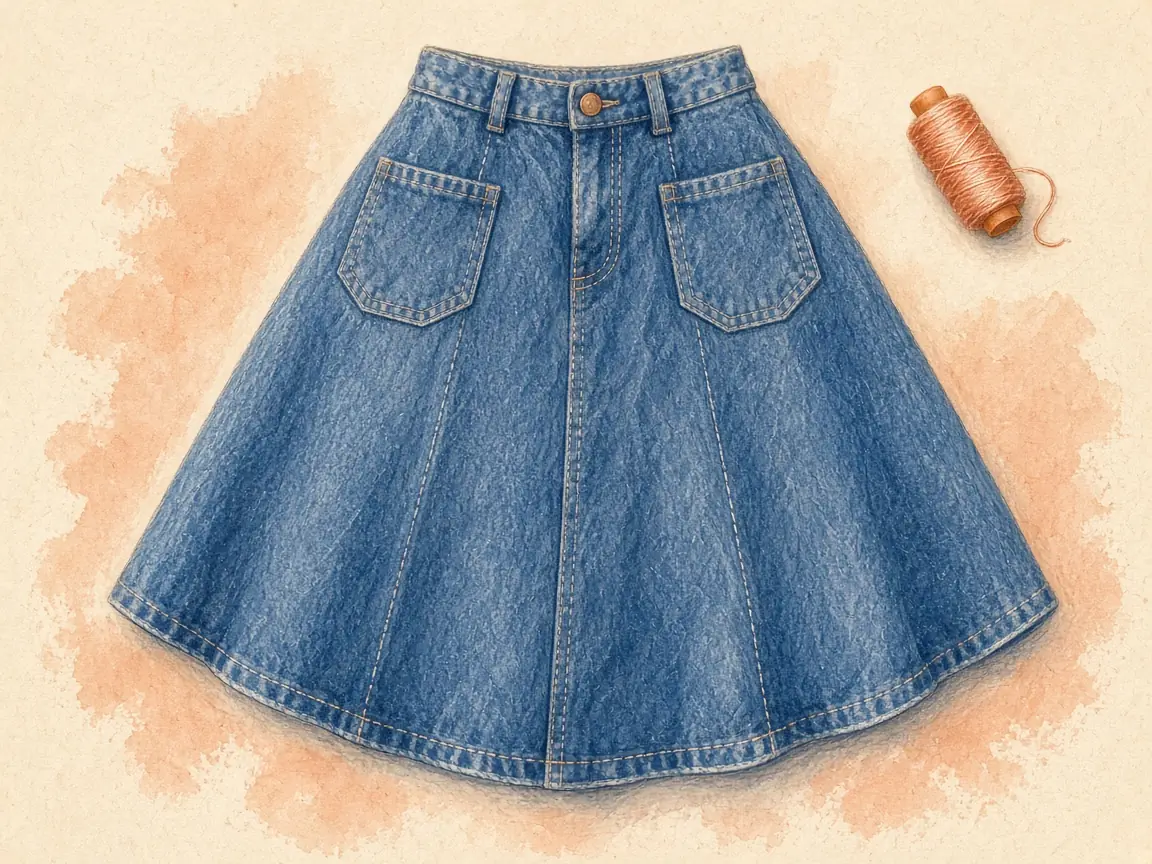
A knee-length half circle hangs closer to the body and uses less fabric — easy to wear with a tucked-in top.
Try with these numbers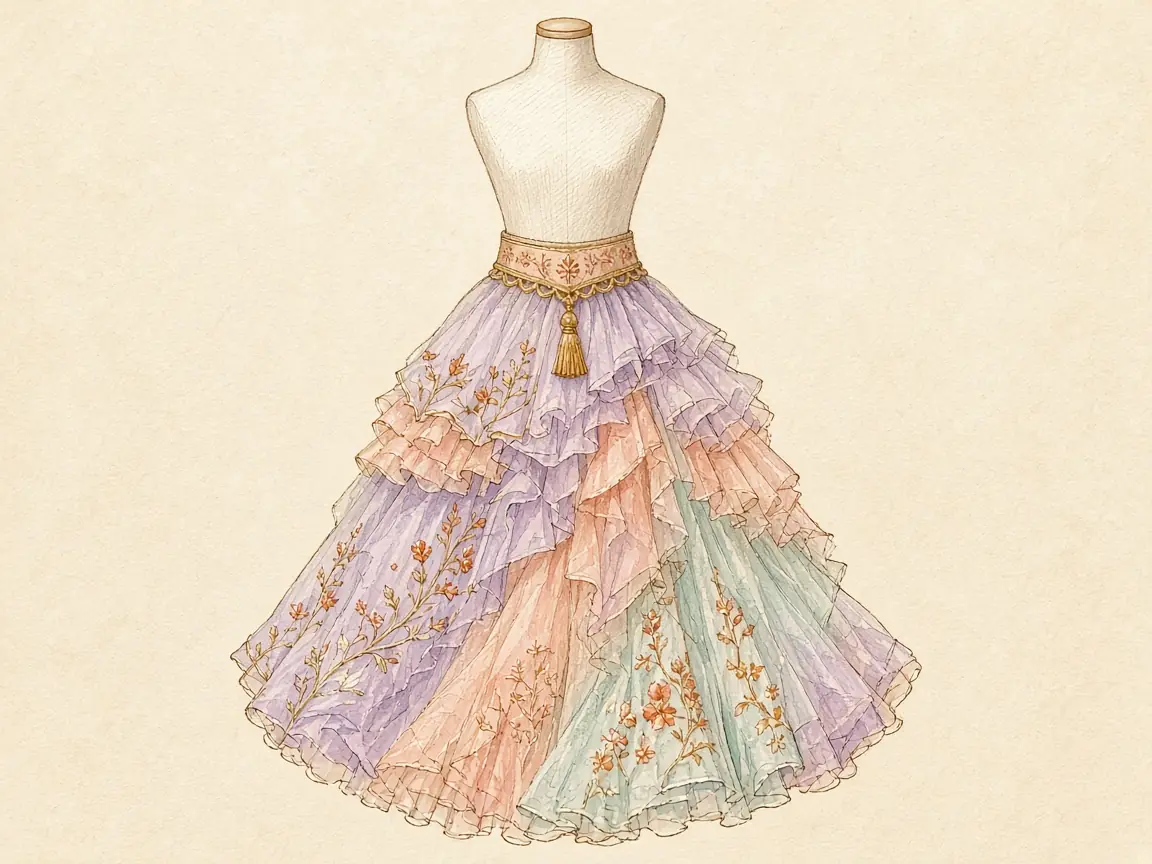
Short full circles twirl the most. Pair one with a petticoat for a fairy-tale or stage silhouette.
Try with these numbers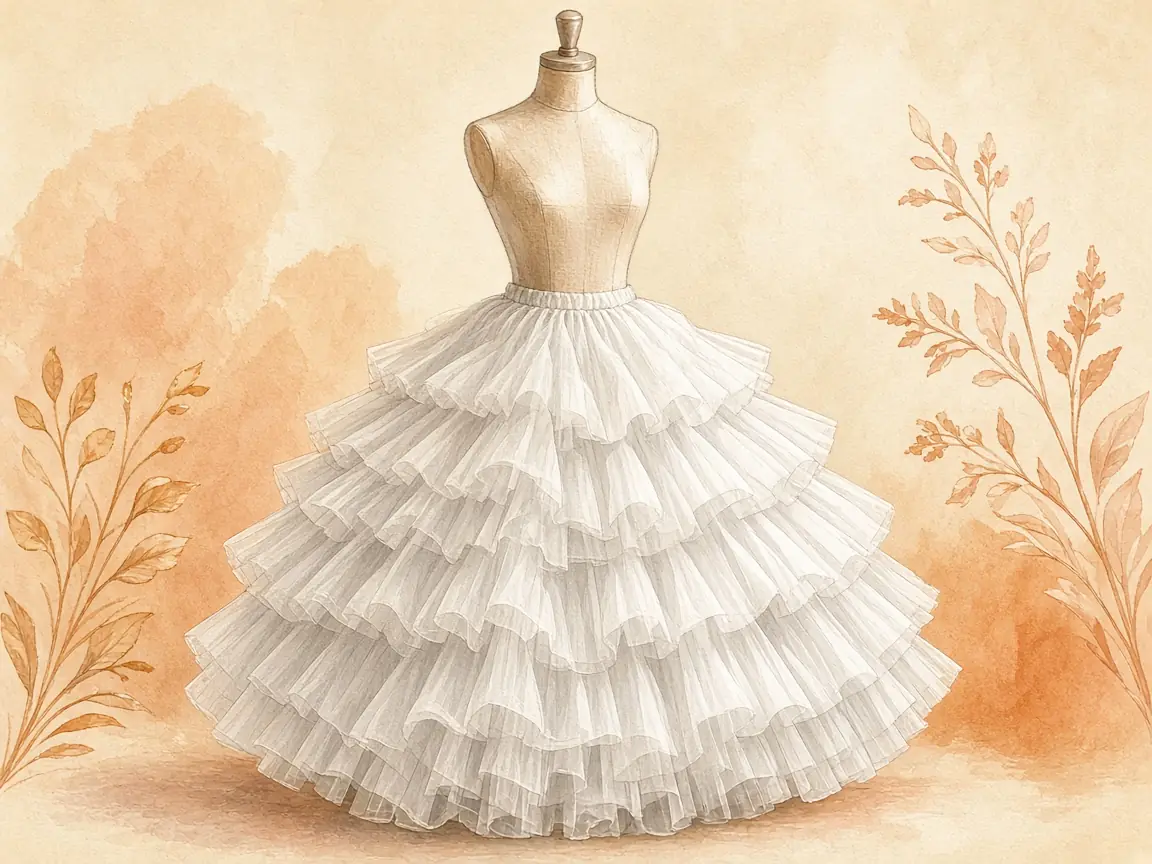
A pull-on elastic full circle for dance practice; for very full petticoats, layer gathered tiers on top.
Try with these numbers
A small elastic-waist circle skirt is a quick first project — the calculator checks the elastic still slips over the hips.
Try with these numbersWant gathered layers instead? Try the tiered skirt calculator.
The math
Two numbers do all the work: the waist radius and the hem radius. Here is where they come from.
Waist radius
A circle skirt is a ring of fabric. Its inner edge has to match your waist opening, so the radius is that opening ÷ 2π for a full circle — or ÷ 1.5π, π and π/2 for ¾, half and quarter.
k is the share of a full circle: 1, 0.75, 0.5 or 0.25. Pull-on elastic adds 2" (5 cm) pass-through ease over the larger of hip and waist; without a hip measurement it falls back to 1.35 × waist.
28" waist, full circle, zipper: r = 28 ÷ 6.283 = 4.456". Cut waist = 4.456 − 0.625 = 3.831" ≈ 3 7⁄8". A 22" skirt with a 1" hem is cut at 4.456 + 22 + 1 = 27.456" ≈ 27 1⁄2".
Seam allowance
Cut on the waist radius, sew a seam, and the waist ends up about 2π × the seam allowance too big — almost 4" for 5/8". The calculator moves the red cutting line inside the blue stitching line for you.
Fabric & printing
How the planner turns two radii into a cutting layout — and a pattern you can tape together.
Layout & yardage
The planner tries one piece, halves, quarters and more, and keeps the shortest grain-safe layout. A 28" × 22" full circle fits in 1 1/2 yd of 60" fabric, but needs 8 panels and 2 1/4 yd on 45".
Yardage is rounded up to the nearest 1/8 yard and 0.1 m. Panels are only turned so their centre line or one straight seam runs exactly along (or across) the grain; the layout diagram marks that line and draws the grain arrow.
Around the hem the grain still changes from straight to bias — normal for any circle skirt, and the reason to let the skirt hang before you level the hem.
1:1 pattern
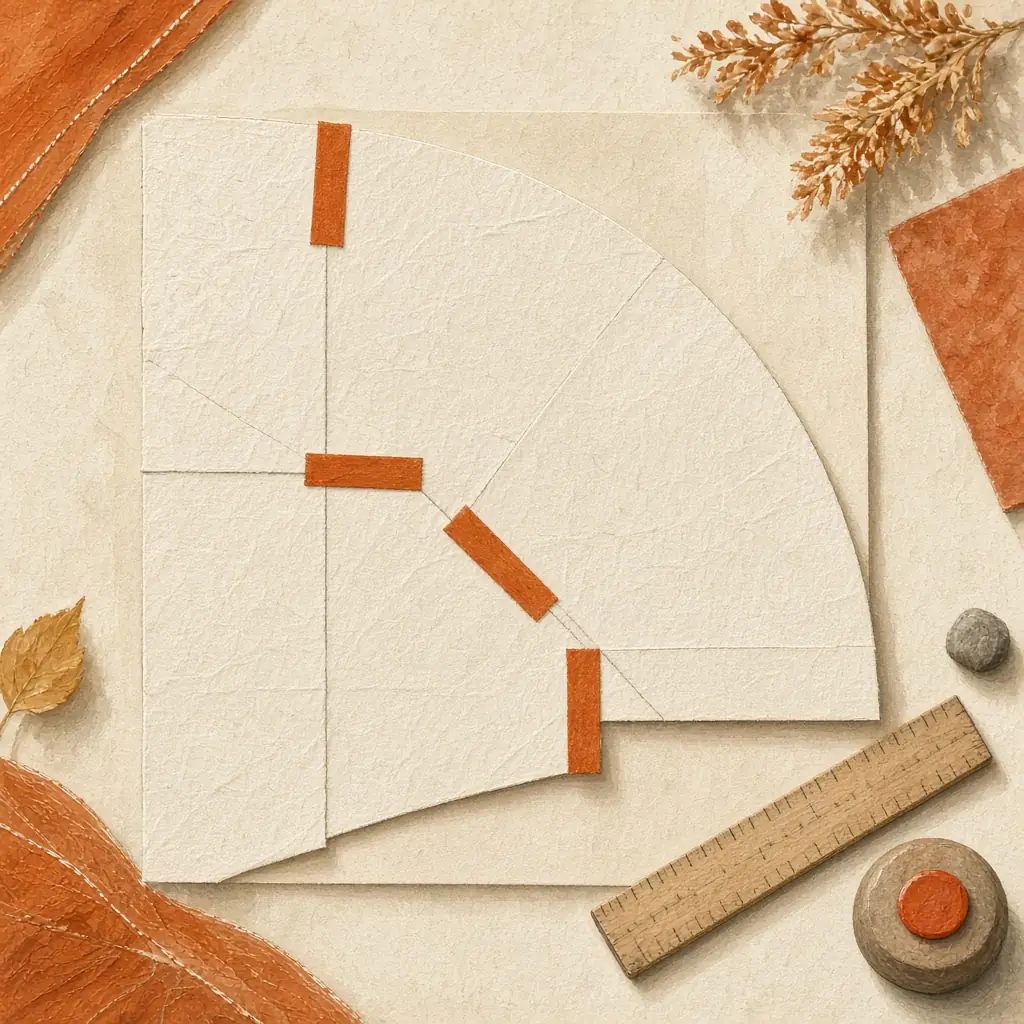
The PDF prints a true-scale quarter-circle (90°) template. Use it ×4 for a full circle, ×3 for ¾, ×2 for a half and ×1 for a quarter — on fabric folded in quarters, or traced around one centre point.
For an eight-panel layout the template is folded on its printed 45° split line. Page 1 of the PDF repeats these instructions for your exact layout, next to the 2" and 5 cm test squares.
Choose “Actual size” and turn off “Fit to page” in the print dialog.
Check the 2" and 5 cm squares on page 1 with a ruler before printing the rest.
Trim one margin on each page, line up the printed crosshairs and tape.
Tips
Stitch the waist curve right after cutting — it is bias in places and stretches easily.
Hang the skirt for 24 hours before hemming so the bias sections can drop, then level the hem from the floor.
A narrow rolled hem or binding made with the bias tape calculator is easiest on a long curve.
For a gentle A-line, try the half circle skirt calculator; for crisp structure, the pleat calculator.
Compare
Both start from the same formula; the calculator just takes care of the steps that are easy to miss.
| Feature | Skirt Calculator | By hand |
|---|---|---|
| Waist radius for full, ¾, half and quarter circles | ✓ | One formula per type |
| Waist seam allowance taken off before cutting | Automatic | Manual step — easy to forget |
| Elastic waist: checks the opening clears your hips | ✓ | Manual |
| Panel layout on 45" / 60" fabric with grain lines | ✓ | Trial and error |
| Yardage rounded up to 1/8 yd and 0.1 m | ✓ | Manual |
| 1:1 printable pattern with test squares | ✓ | Draw with string and chalk |
| Inches (with fractions) and centimeters | ✓ | ✓ |
| Cost | Free, no sign-up | Free |
Yardage depends on waist, length, and bolt width. Enter them into the calculator above for exact yardage; a 22" full circle for a 28" waist needs 1 1/2 yd of 60" fabric in four nested quarter panels, waistband included.
Waist radius = waist opening ÷ 2π for a full circle, ÷ 1.5π for 3/4, ÷ π for a half and ÷ π/2 for a quarter circle; with a zipper the opening is your waist (+ optional ease), and side seam allowance goes on the straight edges. Subtract the waist seam allowance to get the cutting line.
Yes. Waist, side seam, and hem allowances are all applied: waist allowance is subtracted from the waist radius, hem allowance is added to the hem radius, and side seam allowance is added to each straight panel edge.
Yes. Choose pull-on elastic and enter your hip measurement. The opening becomes max(hip, waist) + 2" (5 cm) so it slips easily over your hips. Elastic is cut to waist − 2" (5 cm) + 1" (2.5 cm) overlap, and the calculator checks that it can stretch over your hips (50% stretch by default). Loop the elastic around your waist and try it on before you sew.
The PDF pattern is drawn at exact scale on A4 or US Letter. Print at 100% and measure the 2" and 5 cm test squares on the first page before printing the rest.
Wider fabric usually needs less length. For a 28" waist and 22" full circle the calculator plans 4 panels and 1 1/2 yd on 60" fabric, versus 8 panels and 2 1/4 yd on 45" fabric. Enter your own fabric width to compare.
Yes. Set “Waistband height” to 0 and the calculator leaves the waistband piece out of the layout and yardage. Keep the waist seam allowance if you plan to finish the waist with a facing or bias binding.
Click “Copy share link” above the calculator. Your measurements are written into the link itself, so opening it later — or sending it to a friend — restores the same skirt. Nothing is stored on a server.
Guides

Enter your waist and length — get the radius, yardage and a 1:1 PDF pattern in seconds.